When ten-year-old Lilly Mae Avant and her family went swimming on Labor Day holiday (September 2, 2019), they had no idea that the healthy, high-spirited, country girl would be dead a few weeks later.
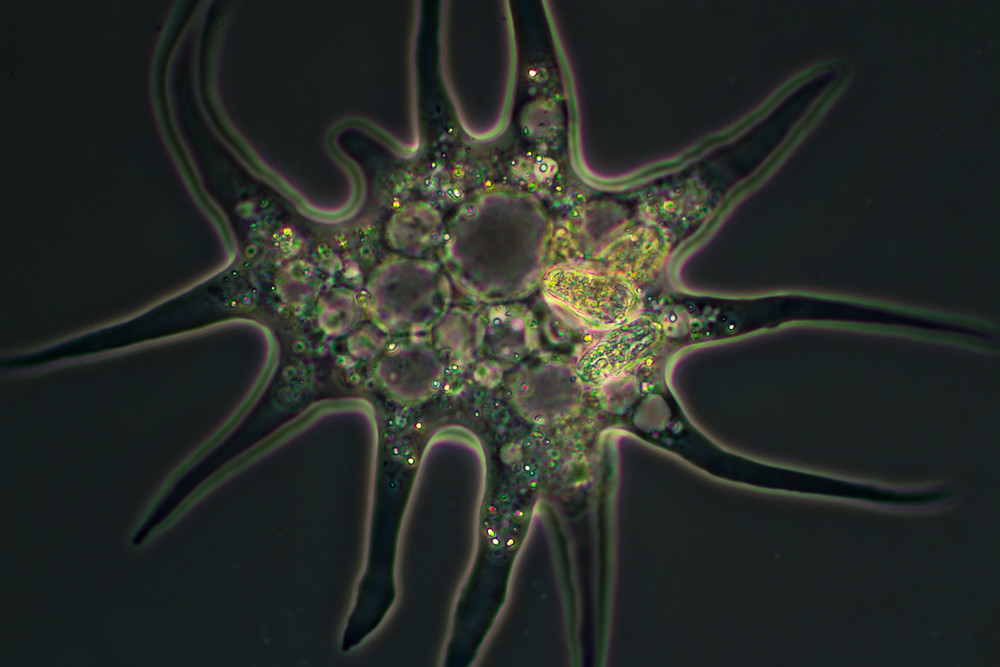
Avant died of brain-eating amoeba, which has a fatality rate of 97 percent. Naegleria fowleri is commonly known as brain-eating amoeba, a free-living, bacteria-eating microorganism that can be found in fresh waters such as lakes, rivers, and hot springs.
While it is a rare, this fatal infection of the central nervous system as the amoeba can travel up the nose and into the brain. Subsequently, the disease destroys brain tissue, causing the brain to swell, and resulting in death. The little girl from Texas probably contracted the deadly disease while swimming in Brazos River or Lake Whitney in Bosque County, near her home in Waco.
Despite the wide media coverage and the reality brain infection is currently rare, several scientists are concerned that as global temperatures rise, more people might contract Naegleria fowleri.
Some studies show that cases are increasing, and the amoeba is being found in new areas. Weather patterns and long-term climate change may be to blame. This is according to a 2012 study titled: ‘Fatal Naegleria fowleri infection acquired in Minnesota: possible expanded range of a deadly thermophilic organism’ by Sarah K. Kemble et al. Similarly, in his 2010 study titled: ‘Swimming with death: Naegleria fowleri infections in recreational waters’, Travis W. Heggie suggests that the condition was “previously thought to be rare” but the number of cases are increasing each year.
Nonetheless, between 1962 and 2018, only 145 individuals are known to have been infected in the U.S. North Carolina has had only five cases in the past 57 years, according to the North Carolina Department of Health and Human Services (NCDHHS).
However, this July, the health department confirmed another case of a 59-year old man who died of the rare brain infection after swimming in a Cumberland County lake.
Carl Williams, a spokesperson at the state health department, explained that Naegleria fowleri is usually associated with summer time when the surface waters are warmer. Unlike climate change experts, Williams is not sure if the rise in global temperatures are an indication of more amoeba cases in the future. “I don’t know the extent to which climate change might have an impact on that (Naegleria fowleri),” William says.
But if people are going to expose themselves to warm surface water, they may be at risk of contracting Naegleria fowleri, cautioned Williams.
“If people are going to jump in the water, we tell them to dive instead and not go in a way that water can be forced up your nose because that’s how people get exposed. But if you dive in with arms first usually you wouldn’t be exposed that way,” Williams said.
Although the infection can also be found in soil that’s damp, the exposure is often seen in surface waters. The infection is also found in ponds or small lakes where there might not be much current or flow, Williams said. “It can get very hot in the summer months so it’s an environmental organism but it’s not a contamination or by product of anything. It’s just there… like a lot of bacteria and when it’s forced up your nose in a manner that the amoeba gets access to the olfactory nerve, that’s where its pathogenesis starts.”
According to Williams, Naegleria fowleri is not a reportable condition in the state of North Carolina. “All we do is investigate the cases when we are made aware of them. It’s not on a list of the 75 or so conditions that are reportable, such as Lyme disease or salmonella, but because Naegleria fowleri infection is so rare and fatal, we try to provide assistance and investigate the cases,” said Williams.
Meanwhile, a few weeks after her death, Avant’s loved ones continue to cherish her time here on earth. A Facebook group with 22,000 members, #Lilystrong, is one of many ways her family and sympathisers keep her memory alive while also creating awareness on Naegleria fowleri.

Photo: Facebook
 Focus on Waterborne Diseases